
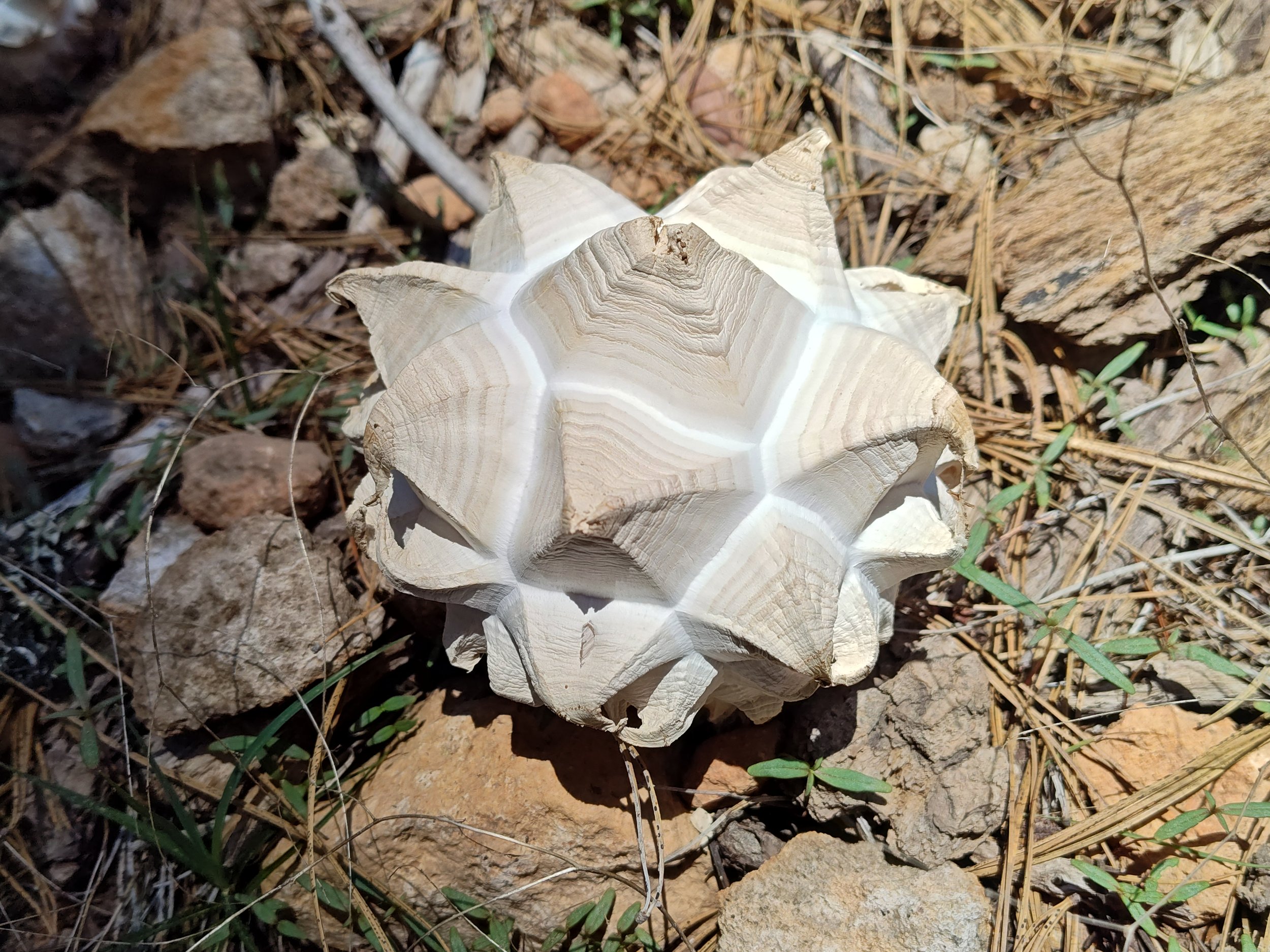
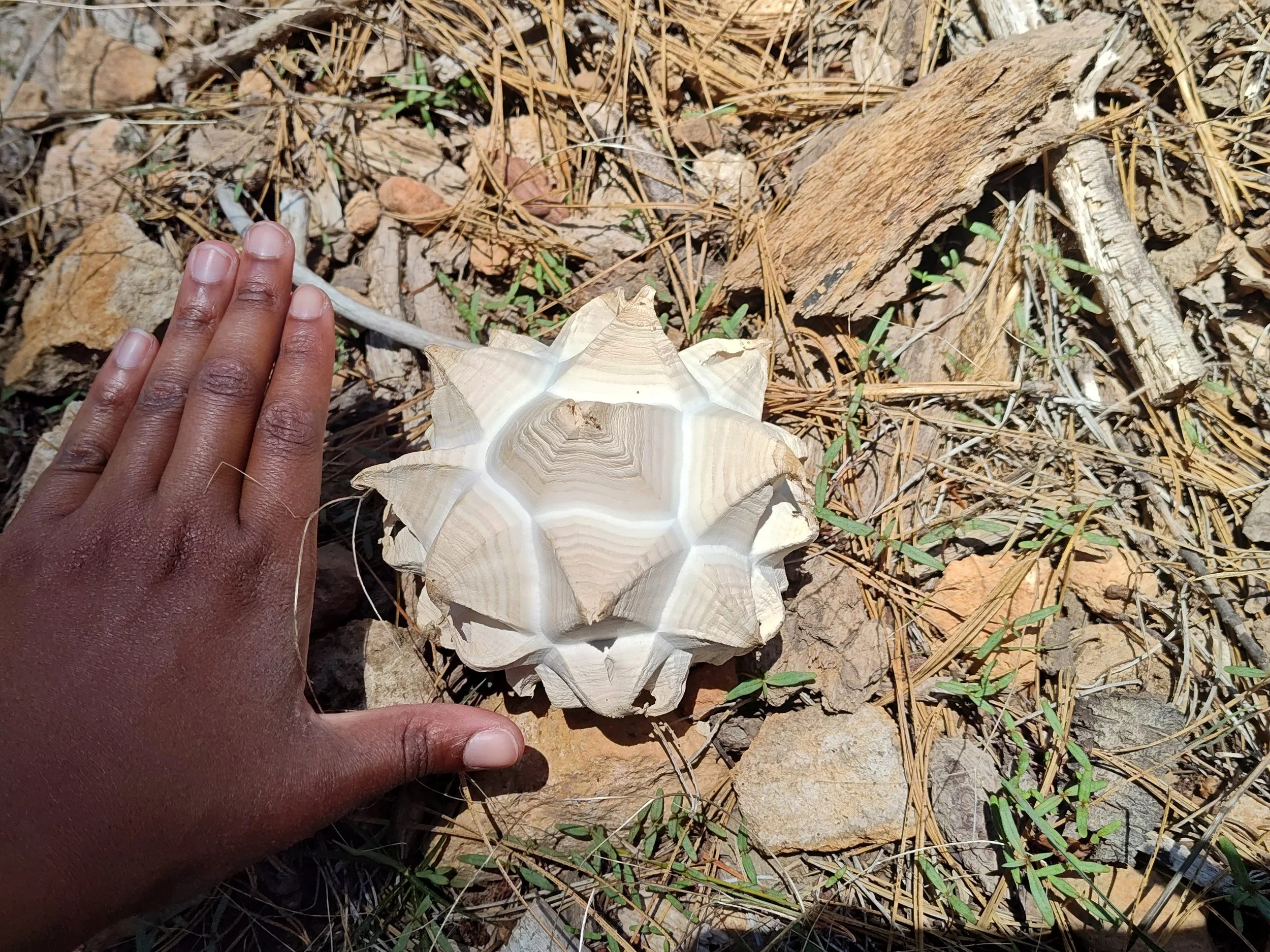
Common Name(s): Sculpted Puffball/Sierra Puffball
Description/Background: This geometric puffball is quite beautiful and seemingly otherworldly. The other researchers and I found it in an area of forest that was partially logged as part of a fuel break treatment. To be honest, the exact species isn’t exactly clear. Depending on what source you look at this is either a Sierra Puffball or a Sculpted Puffball. One website says that the Sierra puffball is similar in appearance but its warts are longer and more pointed than the Sculpted Puffball. Also, the Sierra puffball seems to only grow in the sierras, a condition known as being endemic. Technically, Lassen is only just north of the Sierra Mountain range, so finding one may not be too far of a stretch. However, many pages use the names interchangeably, so I’m not sure.
Is it Edible? Generally, Yes! The sculpted puffball is edible. After doing some research, another coworker and I collected two medium sized puffballs to try. We tried it raw and tried it in some pasta and many compared the flavor to the smell of a damp, used sponge. In the morning my stomach was complaining, but everyone else was ok and I’m still alive. However, despite few digestive complications, no one could seem to stomach a second helping.
Weird Observation: The interior of this puffball stayed cold for an incredibly long time. The pointed geometric nodes on the mushroom were easy to tear off and if you pressed it on your skin it felt almost ice cold. While surprising, we figured it must be because the mushrooms were in partial shadow. However, hours after a piece was separated from the puffball, transported in a hot car exposed to the sun, and left to sit out it was just as cold as before. I’m not sure if there is anything important about this discovery but the idea of a natural ice pack is pretty cool.
Sources:
https://inaturalist.ca/taxa/194565-Calvatia-sculpta
https://www.mykoweb.com/CAF/species/Calvatia_sculpta.html
https://www.mykoweb.com/CAF/species/Calbovista_subsculpta.html
https://www.sherpaguides.com/california/mountains/northern_sierra/lassen_volcanic_nat_park.html
https://kitsapmushrooms.org/edible-mushrooms/sculptured-puffball/
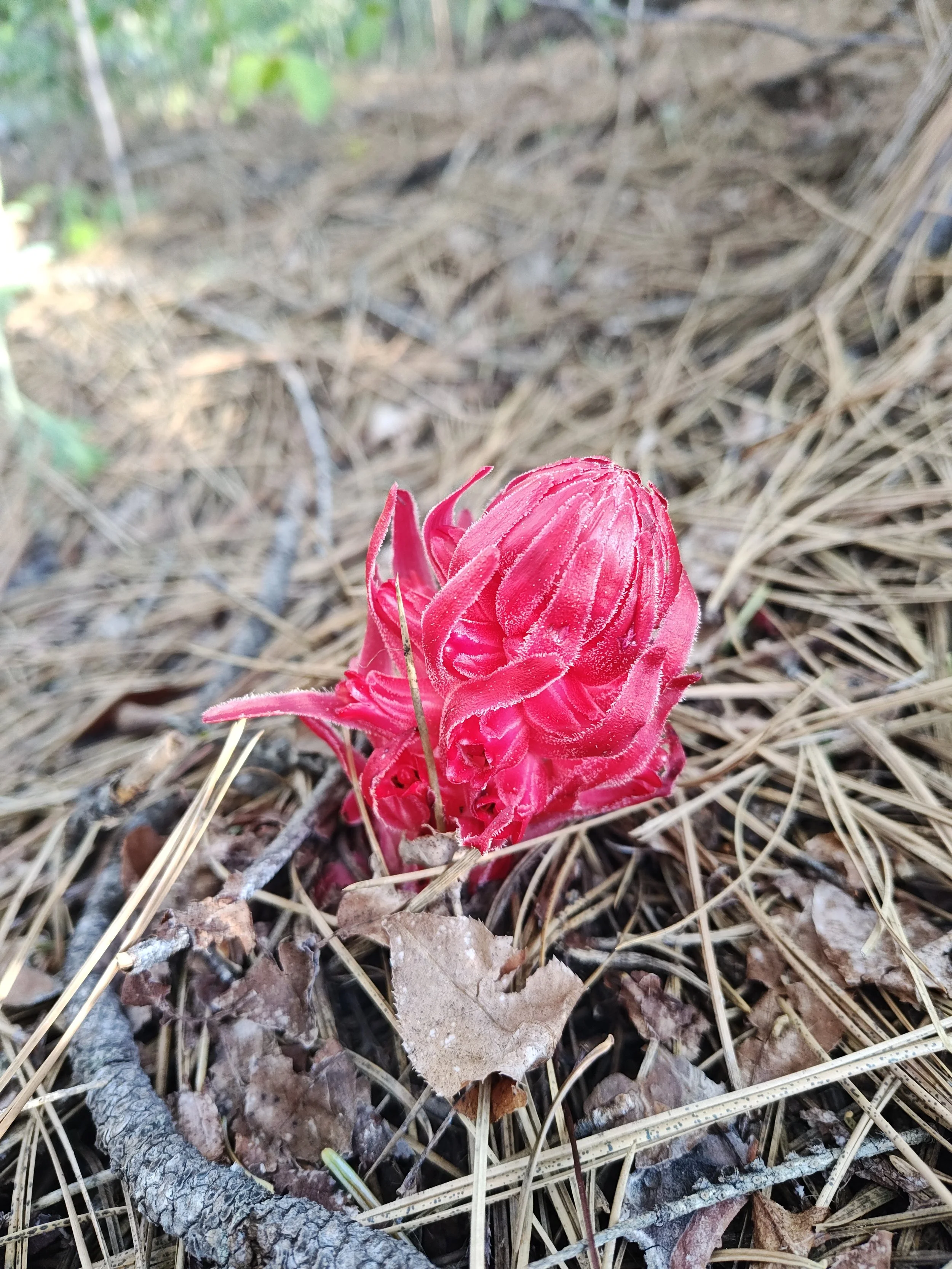
Sarcodes sanguinea
Common Name(s): Snow Plant
Description/Background: Snow plants often pop out of the ground like mushrooms, but don’t be mistaken they are plants. These perennial wildflowers are striking but are also hard to find. If you are looking for these on a hike you’ll have a better chance of finding them in conifer forests where they have easy access to their sources of food. Native to the West coast of the United States they are found in Oregon, California, and Nevada. According to I-Naturalist there are even sightings in Baja California. These plants initially got their name because they were thought to appear while snow was on the ground, but they actually tend to appear after it has melted.
A Parasitic Plants Life: Take note if you ever come across a plant without leaves or chlorophyll (the chemical that makes plants green and allows them to photosynthesize) it’s likely a parasite. This rings true for the Snow Plant. It’s what’s called a mycotrophic parasite, meaning it parasitizes fungi. You may or may not have heard about the mycorrhizal “highways” in forests, but in case you haven't, fungi is everywhere in forest soils. It plays a vital role in the transfer of water and nutrients to various plants and is thought to be used as a communication system for trees. Trees, in return, provide sugars from photosynthesis to the fungus creating a symbiotic relationship. Snow Plants take advantage of this “highway,” and steal nutrients and water rather than seeking it out from primary sources and because they can’t photosynthesize they share no sugars in return.
Why so colorful? It seems like no one really knows. It may be to attract pollinators, but thus far the research seems inconclusive.
Sources:
https://www.fs.usda.gov/wildflowers/beauty/mycotrophic/sarcodes_sanguinea.shtml
https://www.fs.usda.gov/wildflowers/plant-of-the-week/sarcodes_sanguinea.shtml
https://botany.org/home/resources/parasitic-plants/sarcodes-sanguinea.html
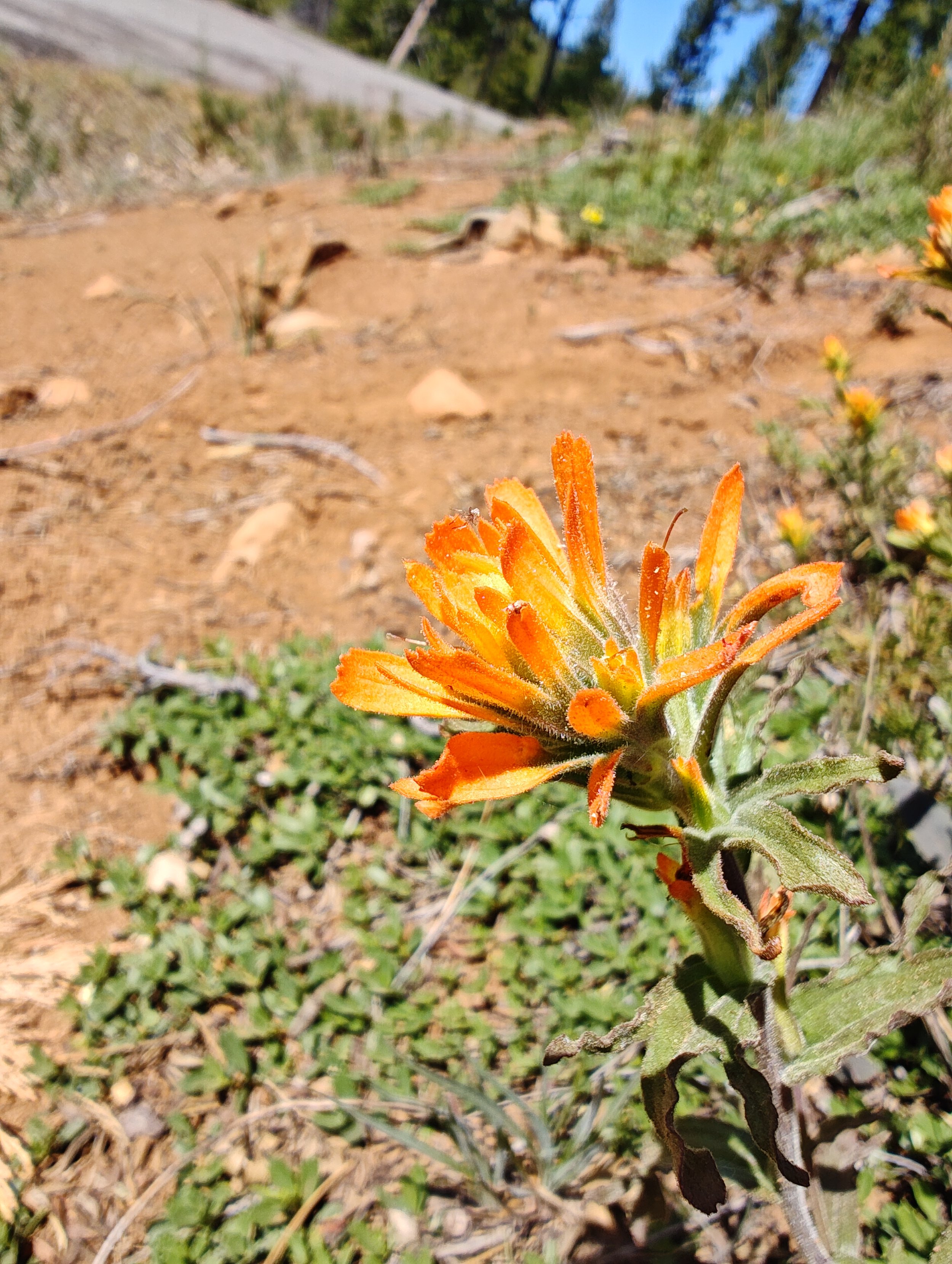
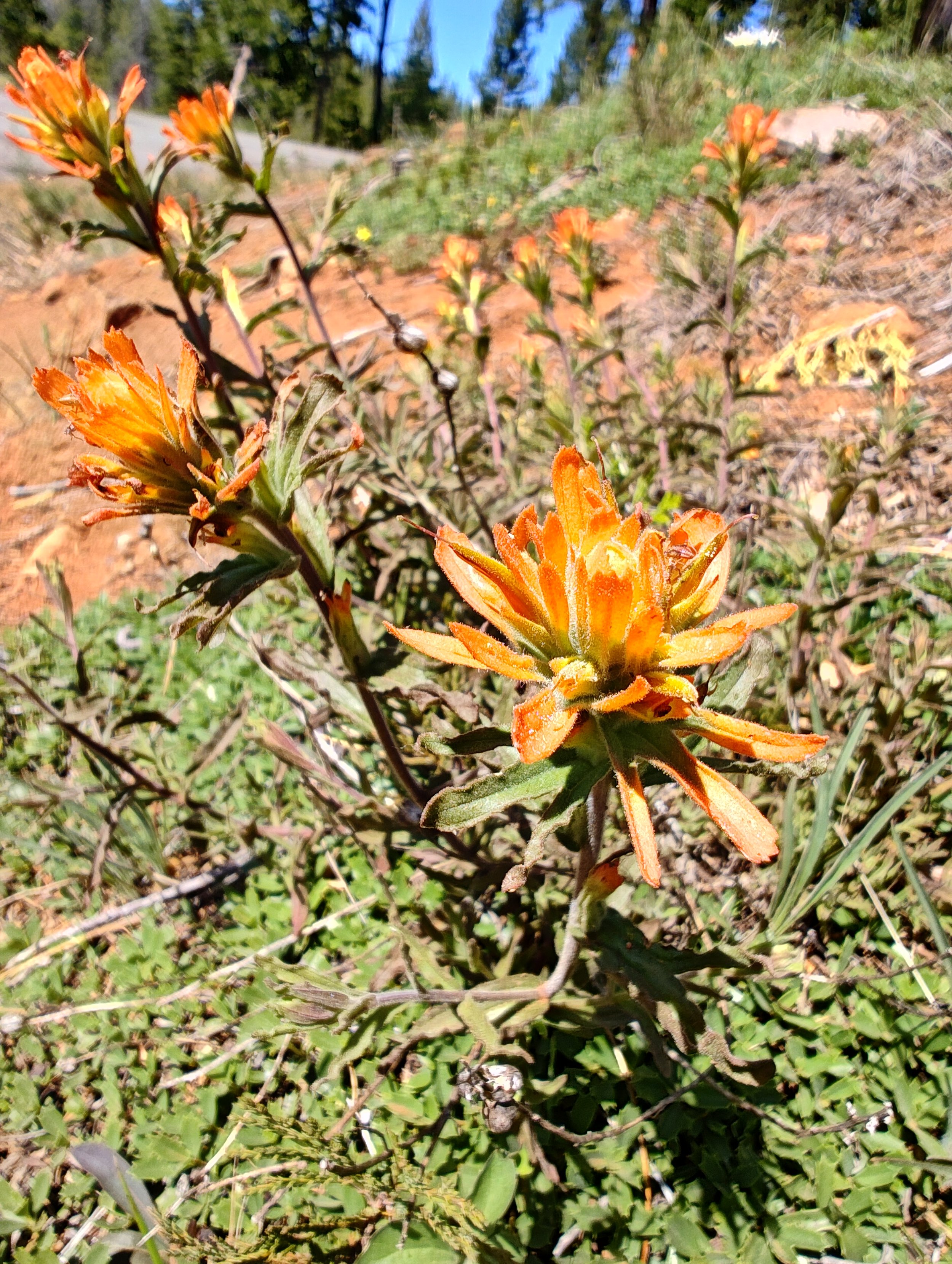
Common Name(s): Wavyleaf Indian Paintbrush, Applegate’s Indian Paintbrush
Description/Background: This Paintbrush is native to the Western United states and prefers rocky dry ground. They’re identifiable by their wavy leaves and brightly colored, long, tubular flowers. You are more likely to find them growing in sagebrush and conifer forests. These brightly colored flowers tend to attract hummingbirds and butterflies, particularly the checkerspot butterfly.
Oops more parasites! Before we talked about the Snow Plant which was an obvious parasite with its lack of green leaves and singular flowering body. The Wavy leaf Indian paintbrush is actually a parasite too. It falls under the category of hemiparasite, which means it still photosynthesizes, but it gathers other nutrients and some water from host plants. Above you can actually see one of its possible hosts growing on the ground, the nitrogen-fixing Ceanothus prostrates. Luckily this relationship, although partially parasitic, does not kill the host.
Sources:
https://www.wildflower.org/plants/result.php?id_plant=caap4
https://plants.usda.gov/home/plantProfile?symbol=caap4
https://link.springer.com/article/10.1007/s11258-021-01200-x
https://klamathsiskiyouseeds.com/product/castilleja-applegatei-wavy-leaf-paintbrush/
https://www.americansouthwest.net/plants/wildflowers/castilleja-applegatei.html
https://www.gardeningknowhow.com/plant-problems/environmental/hemiparasitic-plants.htm
https://www.pnwflowers.com/flower/castilleja-applegatei-ssp-pinetorum
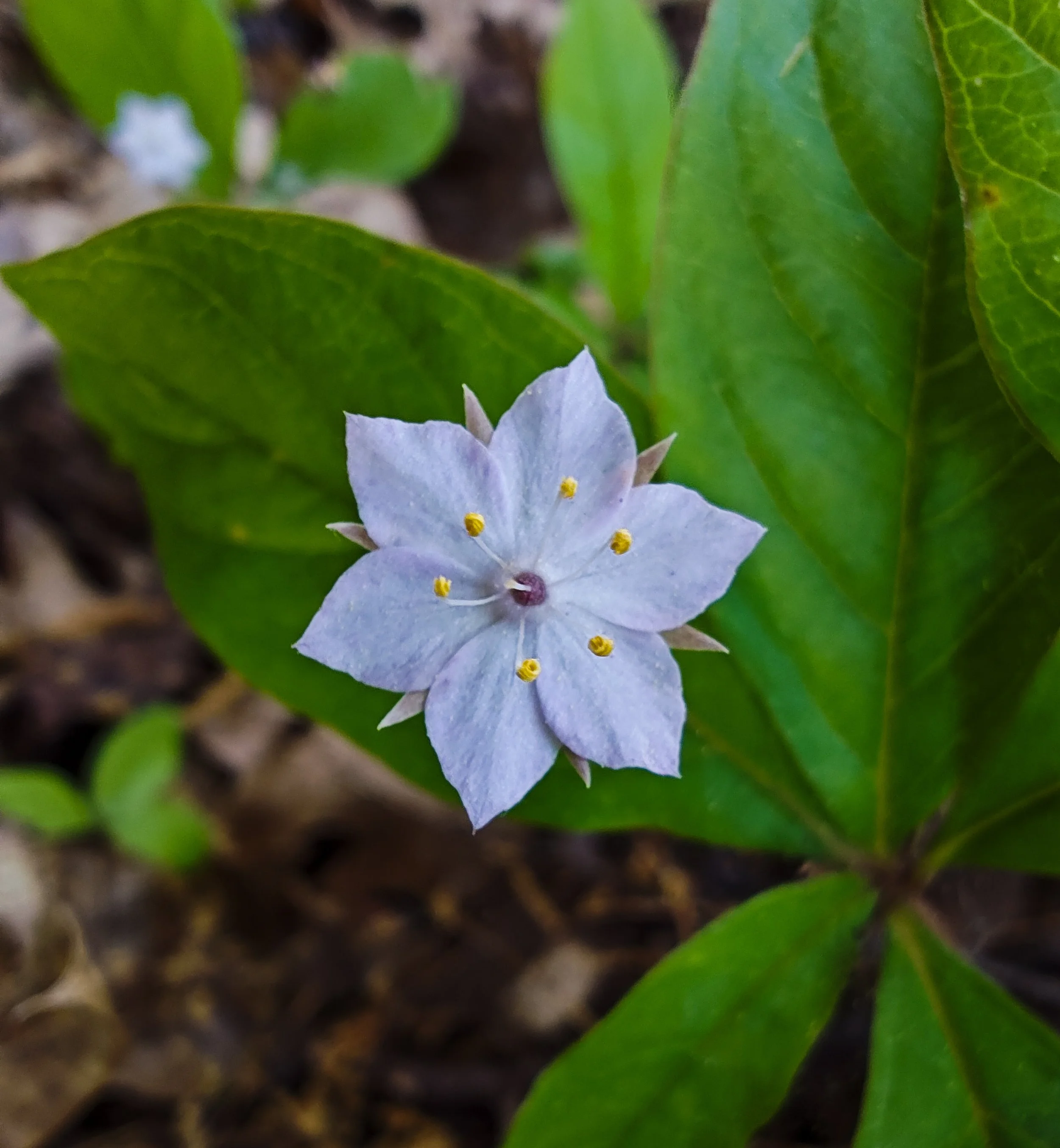
Trientalis borealis
Common Name(s): Western starflower, Pacific starflower, Chickweed-wintergreen
Description/Background: This flower is native to the North Western America’s with a range stretching from California to Yukon in Canada. Belonging to the primrose family, these flowers get their names from the star-shaped pointed flowers that typically bloom from April to July. Their most common pollinators are flies and bees.
Cultural Significance? Despite its beauty, finding any cultural significance was a challenge for this particular starflower. If you search for a starflower you actually get the information about a few different plants with the same common name. What I did find implies that it wasn’t very medically or culinarily useful at all, although maybe some Native American groups used it to help with eye issues. Ecologically it's a similar story. There is some evidence that chipmunks eat the seeds and its pollinators eat its pollen, however most often it just seems to exist. Just vibing, doing its own thing.
Sources:
https://plants.usda.gov/home/plantProfile?symbol=TRBOL
https://burkeherbarium.org/imagecollection/taxon.php?Taxon=Lysimachia%20latifolia
https://www.fs.usda.gov/wildflowers/plant-of-the-week/trientalis_borealis.shtml
http://science.halleyhosting.com/nature/gorge/5petal/primrose/trientalis/latifolia.htm
https://wildadirondacks.org/adirondack-wildflowers-starflower-trientalis-borealis.html
